


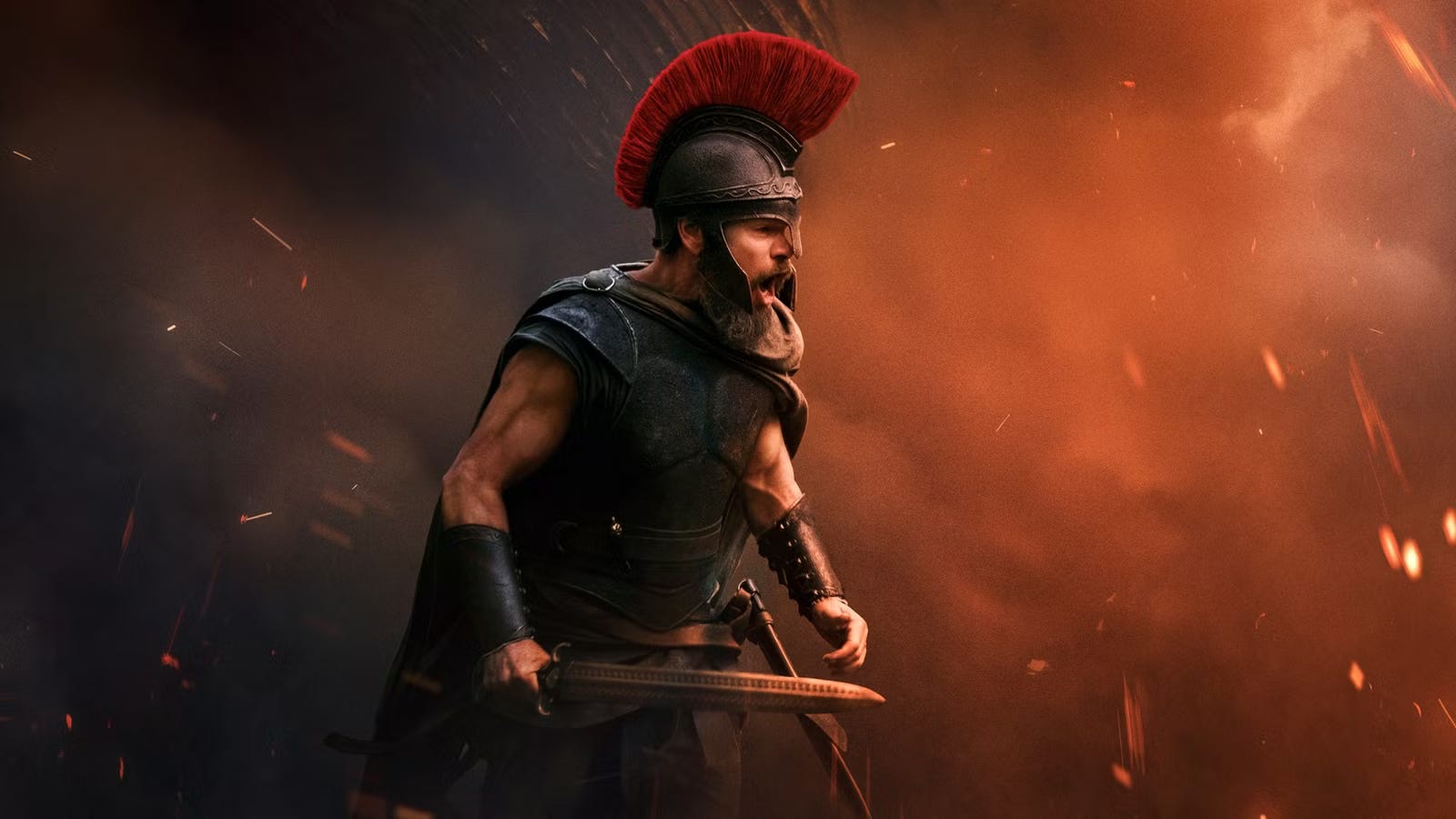
Director Christopher Nolan has released what may be his magnum opus. The Odyssey is a theatergoing experience you will absolutely cherish and is perhaps the last of its kind. More on that later.
This is the type of film only a grandmaster of cinema can pull off. The Odyssey is both a technological marvel and masterclass in filmmaking by the defining director of the 21st century. It is impossible not to be in awe of the sheer magnitude of this production. Christopher Nolan transports us onto beaches, into caves, and around the ocean in locations that are all distinctly grand, intimidating, and tactile.
As an audience member, you feel like you are in the movie. Practical sets are used to perfection and the effect is mesmerizing. And it is all set to the most experimental and gripping score of Ludwig Göransson’s illustrious career. Seriously… you won’t be able to get it out of your head.
With such scale comes the risk of diminishing the intimate. Fortunately, The Odyssey suffers from none of that. In fact, the climax of the film works because of Odysseus’ heart. A massive battle in tight spaces fueled by love, loss, and uncertainly is also where I became overwhelmed with emotion. That was a unique sensation because I’m not sure I’ve ever cried in the middle of a fight scene before. Typically that happens at the end.
But even the greats can have missteps. And the first 30 minutes of the The Odyssey struggles to find its footing. The narrative gets choppy as Odysseus, Telemachus, and Penelope lay the foundation for their respective journeys. Nolan cuts back and forth between Odysseus preparing to leave Ithaca, him fighting in the Trojan War, and being trapped on the beach of Ogygia by Calypso. A lot of background is dumped in a manner that feels rushed yet surprisingly dull.
Right in the nick of time, however, Nolan puts his foot on the gas and doesn’t let up until the credits roll. The flaws of the first act quickly become an afterthought mostly because the rest of the film is truly exceptional. The Odyssey is bookended by what may be my favorite third act of Nolan’s career and an epilogue that is deeply rewarding.
A Star-Studded Ensemble
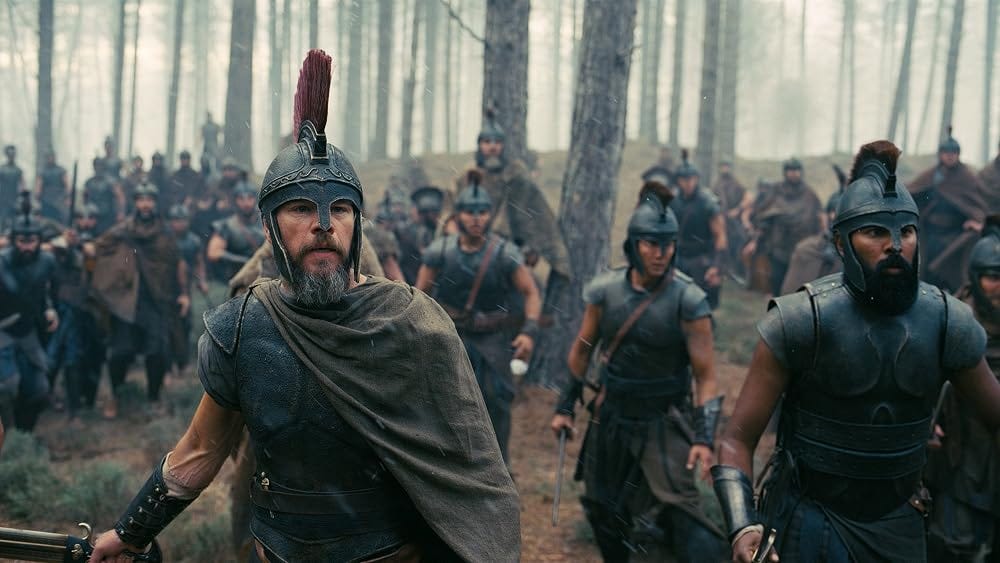
This film would not work without a casting home run. At this scale, A-list movie stars, character actors, and hundreds of extras all need to come together and forge a believable narrative. Nolan’s longtime casting director, John Papsidera, does just that. He assembled one of the great ensembles in movie history and I have to think he is the frontrunner for that category at the 2027 Academy Awards.
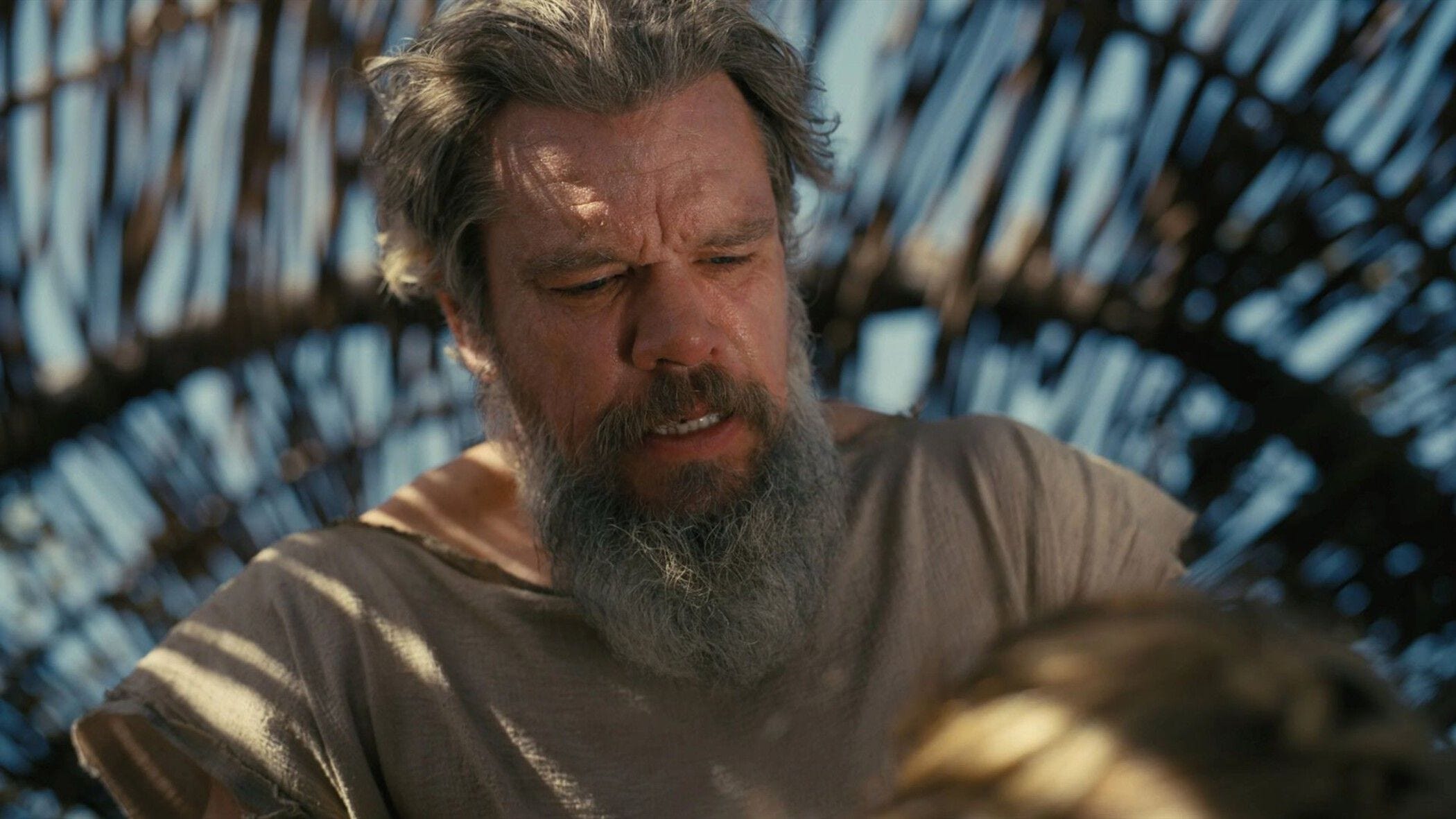
At the helm of this stacked cast is the ever transformative Matt Damon. As Odysseus, Damon has far more screen time than anyone else and has to bear both the emotional weight and physicality of The Odyssey on his shoulders. The movie flows through him and he absolutely crushes the role. Much has been said about his physical transformation for this character, but I’d rather focus on the emotional side of the performance.
Everybody loves Matt Damon and Nolan is well aware of that. He makes the conscious choice to develop this version of Odysseus as a far more noble and conflicted warrior than Homer’s original poem suggests. The violence, gore, and abuse Odysseus’ men caused many townships is inferred rather than shown. We don’t see Odysseus bask in his glory and spend ample time with Circe, if you catch my drift. The lotus flower romance with Calypso is barely suggested as anything but her taking advantage of a vulnerable man. These are a series of decisions that smartly enhance the emotional payoff of the final act, and it all rests heavily on Damon’s ability to get audiences to root for him.
That is why well-executed modern adaptations of ancient texts are so fun. You can be familiar with the story, but still entirely surprised by the outcome. Odysseus’ arc was as captivating as it was surprising.
Other standouts include Samantha Morton, Himesth Patel, Robert Pattinson, Anne Hathaway, Elliot Page, John Leguizamo, and Tom Holland. Each embody the emotional toll of their roles and leave us with memorable moments at various points across the near 3-hour runtime of the movie. Morton, Patel, and Leguizamo, in particular, were exceptional. They each command the screen and have exceptional chemistry with Damon. I foresee some Oscar campaigns in their future.
The Burdened Genius
Nolan’s decision to make the The Odyssey after Oppenheimer may seen like a master director flexing his range on either side of his own very broad spectrum. And in many ways that is true. But what I can’t stop thinking about is how similar both stories really are.
"Now I am become Death, the destroyer of worlds." - Oppenheimer
At their core, Odysseus and Oppenheimer toe the line between fulfilling their duty and the consequences of their actions. You could say that each are suffocated by the weight of their genius.
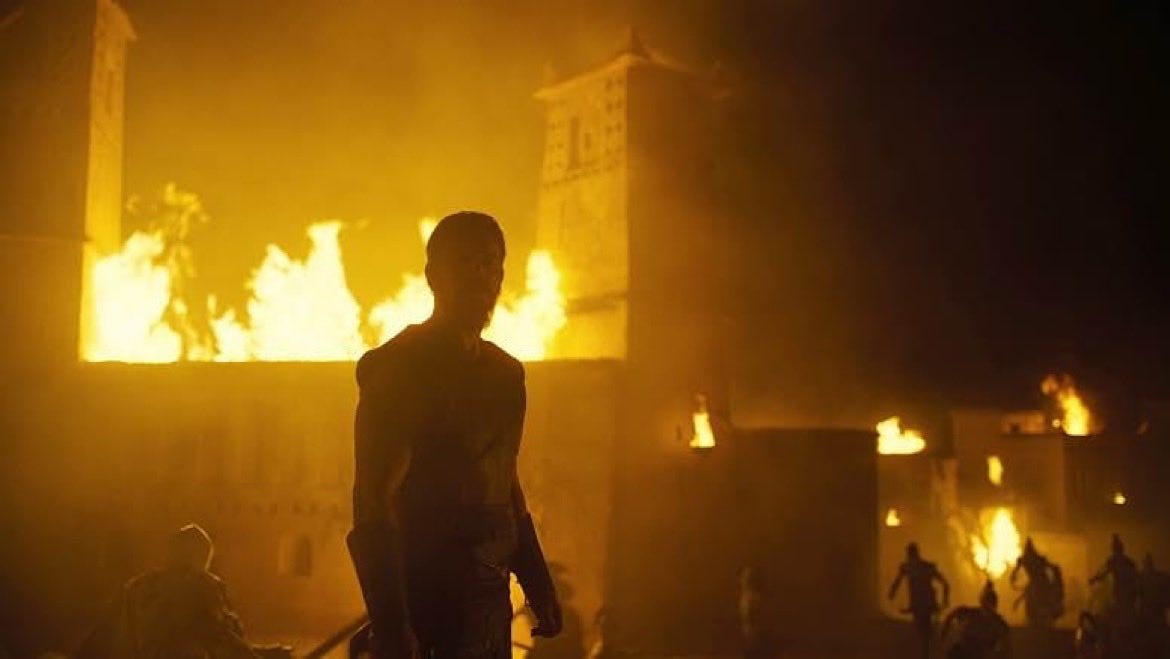
Perhaps the most moving scene in The Odyssey is when Odysseus, disguised as a beggar, is recounting the Trojan War on the steps outside of Penelope’s quarters. What’s originally depicted as a one-sided victory earlier in the film is shown again, much more brutally. Athena, guised as a women of Troy, is beheaded alongside her statue set to a moving monologue of regret and destruction. Odysseus explains that his men are the ravaging sea people whom forever desecrated Zeus’s Law.
In the year 2026, that moral code remains lost.
“To burn the walls of Troy was to burn the world-entire.” - Odysseus
This is a director clearly devoted to examining our modern world in the context of its past and that makes me incredibly excited for what he does next.
The Last Of Its Kind?
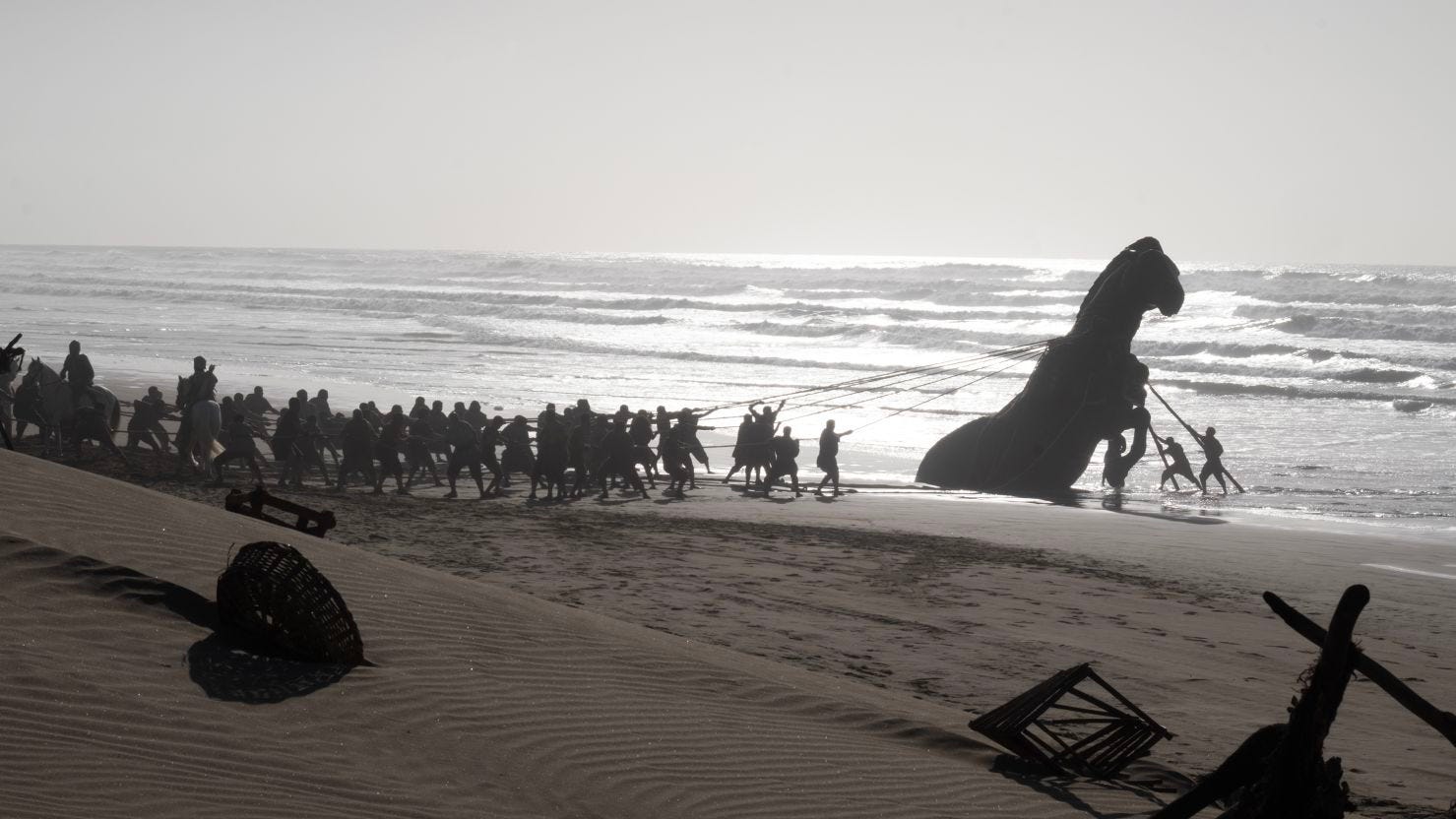
One of the underlining discussions that needs to be had about this triumph of a film is whether another one of its kind is even possible. In the world of CGI, streaming slop, and the growing influence of AI, studios seem increasingly interested in taking shortcuts for sake of maximizing profits and shortening postproduction time.
This inherently anti-art progression of Hollywood puts tactile, practical filmmaking at risk. Amplify that on the scale of an epic like The Odyssey, and it is hard to see many studios green-lighting a film of this magnitude to anyone not named Christopher Nolan.
While that is a depressing thought, at the time of publishing this article, The Odyssey is smashing all of its box office projections. It opened to a whopping $264 Million, making back its production budget, which is the biggest opening of Nolan’s career. This is insanely impressive for a rated-R movie made for mature audiences.
We can only hope this glowing reception at the box office helps convince major studio execs that this is the type of filmmaking the people want. Exceptional movies like Project Hail Mary, Obsession, and Nirvanna The Band The Show The Movie are other 2026 releases that also embraced this motto of originality and practical art. Things are trending in the right direction, but we must keep supporting these types of films.
Final Thoughts

The Odyssey is one of the most ambitious films of all time and deserves to be celebrated for its brilliant thesis, performances, and technical achievement. A slightly disjointed first act that will likely grow on me with time is my only gripe for a film that will be studied and admired for the rest of time.
What did you think of The Odyssey? Let’s have a discussion!
Thank you for reading Blitz’s Backlot! If you enjoyed this, please consider sharing the publication to other film lovers. I greatly appreciate your support.

